Stepping into a boudoir session can feel like standing at the edge of something both thrilling and terrifying. You’ve made the decision to celebrate yourself in one of the most intimate ways possible, yet nerves may be whispering doubts in your ear. What if you look awkward? What if you can’t relax? What if you don’t know what to do? These concerns are not only normal—they’re nearly universal. In fact, research shows that approximately 99.9% of clients experience pre-session jitters, regardless of their background or confidence level. The key to transforming this vulnerable experience into something powerful lies not in eliminating the nervousness, but in learning to trust the process and let go.
Understanding how to surrender to the experience, release control, and embrace the moment can turn your session from a nerve-wracking appointment into a transformative journey of self-discovery. This article explores the psychology behind trusting the process, practical techniques for letting go, and the profound rewards that await when you allow yourself to be fully present in your boudoir experience.
Understanding the Power of Vulnerability
At the heart of every boudoir session lies vulnerability—the willingness to be seen, to step outside your comfort zone, and to embrace aspects of yourself you may have kept hidden. Far from being a weakness, vulnerability is actually your greatest asset during a session. When you allow yourself to let your guard down and show your authentic self, you create space for genuine, intimate photographs that capture your unique beauty and personality.
Being vulnerable in front of the camera means more than simply wearing lingerie or revealing clothing. It means opening up to your photographer, allowing them to capture your genuine emotions and expressions, and releasing the self-consciousness that tells you to hide perceived flaws. This act of vulnerability creates what many describe as a cathartic experience, allowing you to process emotions and insecurities in a safe, supportive environment. When you trust the process enough to be vulnerable, you’re not just creating beautiful images—you’re honoring your journey and celebrating your body exactly as it is.
The transformative power of vulnerability extends beyond the session itself. Studies have shown that seeing positive, empowering images of oneself significantly improves body image and self-esteem, with 88% of boudoir clients reporting higher confidence after their session. By embracing vulnerability, you’re not just passively accepting your appearance; you’re actively choosing to see yourself through a lens of love and celebration rather than criticism.
The Psychology of Letting Go
Trusting the process requires understanding what prevents us from letting go in the first place. Most pre-session anxiety stems from the desire for control and perfection. We worry about controlling our appearance, controlling how we’re perceived, and achieving perfect results. However, the paradox of boudoir photography is that the more tightly you grip that control, the more stilted and uncomfortable your images may appear.
Perfectionism is fundamentally incompatible with authentic photography. When you fixate on making everything picture-perfect, you stress yourself out and miss the real magic happening in front of you. Your quirks and imperfections are what make you uniquely human, and that’s precisely where beauty lies. Professional photographers understand that perfection isn’t the goal of an image—authenticity is. The most compelling photographs often emerge from those “in-between” moments when you’ve stopped trying to look a certain way and simply allowed yourself to exist in the moment.
Releasing the need for perfection also means accepting that some aspects of the session are beyond your control. The lighting, the photographer’s creative direction, even how your body responds to posing—these elements work together in ways you cannot fully orchestrate. Learning to trust your photographer’s expertise and surrender to their guidance allows you to shift from a mindset of anxiety to one of collaboration. This shift transforms the session from a performance you must execute flawlessly into an experience you can actually enjoy.
Building Trust Before the Session
Trust doesn’t begin when you step in front of the camera—it’s cultivated in the days and weeks leading up to your session. The foundation of letting go starts with choosing the right photographer, someone whose work resonates with you and who makes you feel comfortable from your very first interaction. Take time to communicate openly about your concerns, insecurities, and goals. Professional photographers are not only skilled at technical aspects but also at creating a safe, judgment-free environment where you can express yourself authentically.
Many photographers offer pre-session consultations, either in person or virtually, which serve a dual purpose. These meetings allow you to discuss wardrobe, poses, and expectations, but they also help you become familiar with your photographer before the vulnerable moment of being in front of the camera. When you feel like you already know the person photographing you, the experience becomes much more comfortable and collaborative. Think of it this way: you don’t have to be best friends with your photographer, but you should feel comfortable enough that you could spend an hour having coffee together.
Communication is paramount to building trust. Share what makes you nervous, whether it’s concerns about specific body parts, poses that might feel uncomfortable, or fears about judgment. Your photographer can only support you effectively if they understand your needs. Remember that experienced boudoir photographers have heard it all—they’ve worked with clients of all body types, confidence levels, and comfort zones. Your concerns are valid, and voicing them isn’t a burden; it’s a necessary part of creating an experience tailored to you.
Practical Techniques for Trusting the Process
Breathwork and Grounding
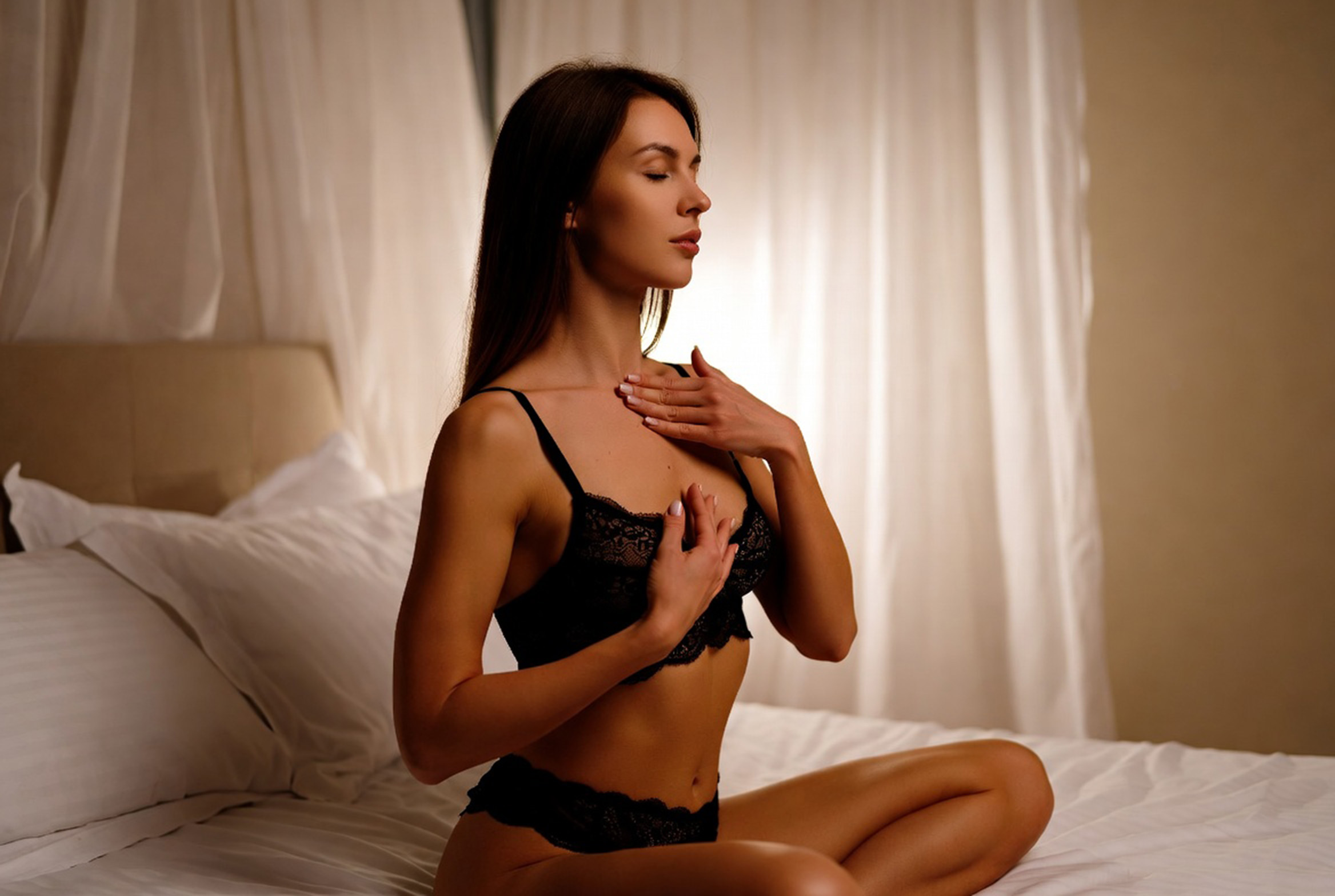
One of the most powerful tools for calming pre-session nerves is conscious breathing. When you’re anxious, your body naturally shifts to shallow, rapid breathing, which only intensifies the stress response. Counteract this by practicing deep, intentional breathing exercises before and during your session. Techniques such as box breathing—inhaling for four counts, holding for four, exhaling for four, and holding again for four—help calm your nervous system and bring you into the present moment.
During the session itself, don’t be surprised if your photographer reminds you to breathe. Many clients hold their breath while posing without even realizing it, which creates tension in the face, neck, and shoulders. Deep breathing not only relaxes your muscles but also slows your heart rate, giving you more control over nerves and helping you feel grounded. Think of your breath as an anchor that keeps you tethered to the present moment rather than spiraling into anxious thoughts about how you look or whether you’re doing it “right.”
Mindfulness and Presence
Mindful photography—the practice of being fully present during the creative process—offers profound benefits for both photographers and subjects. For your boudoir session, this means releasing attachment to outcomes and instead focusing on the experience itself. Rather than worrying about the final images, pay attention to what you’re sensing in the moment: the texture of the fabric against your skin, the warmth of the lighting, the sound of the shutter, your photographer’s encouraging words.
Being present also means accepting what arises without judgment. If you feel awkward in a pose, communicate that rather than forcing yourself to endure discomfort. If you laugh at an unexpected moment, embrace it—those genuine expressions often produce the most beautiful, authentic images. The camera captures not just what you look like but the energy and emotion you’re experiencing. When you’re truly present, that authenticity shines through in ways that no amount of perfect posing can replicate.
Positive Affirmations and Self-Talk
The internal dialogue you maintain before and during your session significantly impacts your experience. Negative self-talk—focusing on perceived flaws or comparing yourself to others—creates a mental barrier that prevents you from fully embracing the moment. Combat this by intentionally practicing positive affirmations in the days leading up to your session and even while being photographed.
Powerful affirmations for boudoir sessions include statements like “I am worthy of being documented,” “I will be kind and have patience with myself,” and “My mind is open to new and exciting things”. You might also try affirmations that specifically address your concerns: “I release the need for perfection,” “I am beautiful exactly as I am,” or “I trust my photographer to capture my essence”. These aren’t just feel-good statements—they’re tools for retraining your brain to see yourself with compassion rather than criticism.
Consider creating visual reminders of your affirmations. Write them on sticky notes around your home, set them as phone reminders, or make them your wallpaper in the weeks before your session. The more you expose yourself to these positive messages, the more naturally they’ll arise when you need them most—like when you’re feeling vulnerable in front of the camera.
During the Session: Surrendering to the Experience

Focus on the Photographer's Guidance
One of the most effective ways to let go during your session is to shift your focus from your own anxieties to your photographer’s direction. Professional photographers are trained to guide you through poses that flatter your body and capture your best features. They know how to use angles, lighting, and composition to create stunning images, so trust their expertise rather than second-guessing every instruction.
When your photographer gives you a prompt—whether it’s “arch your back slightly,” “look over your shoulder,” or “think about something that makes you smile”—commit to it fully rather than worrying about whether you’re doing it correctly. Remember that photographers take multiple shots of each pose and will guide you through adjustments as needed. You don’t have to get it perfect on the first try; the process is collaborative and iterative.
Many photographers also incorporate movement into sessions precisely because it helps clients relax and produces more natural images. When you’re given an action to perform—walking toward the camera, playing with your hair, or adjusting your outfit—you have something to focus on besides your insecurities. These moments of movement often yield the most authentic expressions and poses, capturing you in a state of natural grace rather than forced positioning.
Embrace Imperfection and Authenticity
The most powerful shift you can make during your session is releasing the pursuit of perfection and instead embracing authenticity. Your so-called imperfections—the curves you’ve criticized, the scars that tell stories, the expressions that feel too vulnerable—are precisely what make your images uniquely yours. Professional photographers don’t see flaws when they look at you; they see texture, character, and the human experience written on your body and face.
Consider that some of the most beloved photographs are those that capture genuine, unguarded moments rather than rigid perfection. The laugh lines that appear when you genuinely smile, the slight blur of movement as you toss your hair, the vulnerable expression in your eyes when you let your guard down—these elements create emotional resonance that technical perfection never could. When you stop trying to conform to some idealized standard and instead allow yourself to simply be, you create space for images that reflect your true essence.
This doesn’t mean abandoning all guidance or effort. It means finding the balance between technical execution and raw authenticity. Trust that your photographer will handle the technical aspects—the lighting, composition, and camera settings—while you focus on being present and allowing your genuine self to emerge. That collaboration between professional skill and authentic presence creates magic.
Allow Yourself to Play and Explore
Boudoir sessions don’t have to be serious, sultry affairs from start to finish. In fact, incorporating playfulness and exploration often leads to the most memorable experiences and captivating images. Your photographer might suggest trying different expressions, experimenting with various poses, or playing with props and fabrics. Embrace these opportunities to explore different facets of yourself rather than clinging to a single predetermined idea of how you “should” look.
Give yourself permission to laugh, to feel silly, to try things that might not work. Not every pose or expression will result in a keeper image, and that’s perfectly okay. Professional models themselves don’t achieve perfection in every shot—they try different approaches, learn what works for their body, and trust the photographer to select the strongest images. Your willingness to experiment and play demonstrates confidence and creates opportunities for surprising, beautiful moments you never could have planned.
This exploratory mindset also helps shift your focus from outcome to experience. Instead of constantly worrying about whether you look good enough, you become engaged in the creative process itself—the sensation of movement, the interplay of light and shadow, the collaboration with your photographer. This engagement naturally produces more authentic, dynamic images than any amount of rigid control ever could.
Overcoming Common Mental Blocks
Body Image Concerns
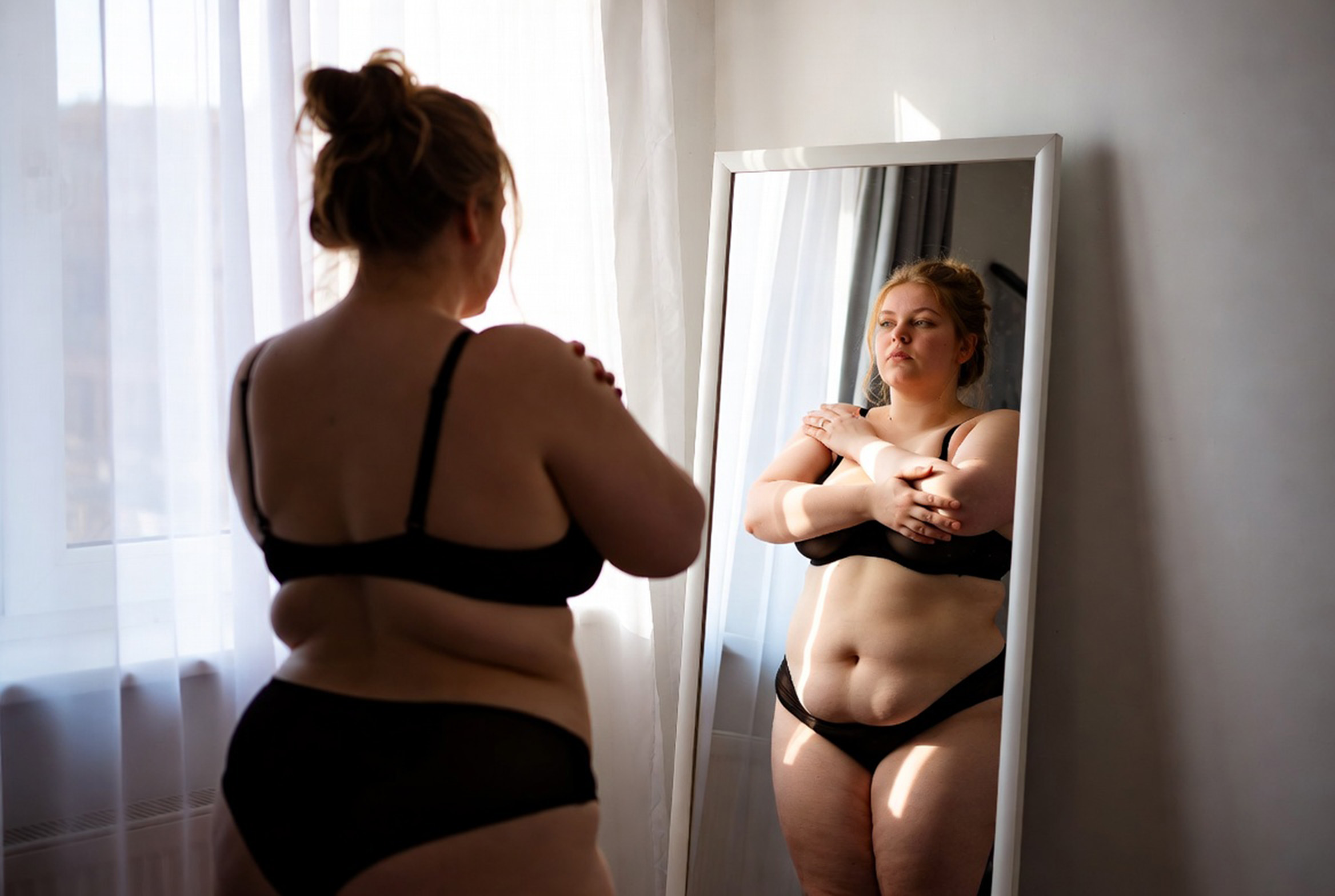
Body image insecurity is perhaps the most common barrier to trusting the process during a boudoir session. You may fixate on perceived flaws, compare yourself to images you’ve seen of other people, or feel that your body doesn’t measure up to some idealized standard. These concerns are valid and deeply felt, but they’re also based on a distorted view that doesn’t account for the artistry of professional photography or the unique beauty you possess.
Combat body image concerns by remembering that beauty exists across all shapes, sizes, and variations. Boudoir photography celebrates diversity and individuality rather than conforming to narrow standards. Your photographer has chosen this work specifically because they find beauty in authentic human bodies—all of them. They understand how to pose, light, and photograph you in ways that highlight your best features while creating a cohesive, beautiful narrative.
It’s also helpful to remember that you’ll see yourself differently through the camera lens. Many clients report being genuinely shocked when viewing their images, thinking they look like someone completely different—someone beautiful, confident, and worthy of celebration. This shift in perspective isn’t because the camera lies; it’s because you’re finally seeing yourself as others see you, free from the harsh internal critic that has colored your self-perception for so long.
Fear of Judgment
Another significant mental block is the fear of being judged—by your photographer, by anyone who might see the images, or even by yourself when you look at the final results. This fear can make you hold back, preventing full engagement with the experience. However, understanding the reality of professional boudoir photography can help ease these concerns.
Professional boudoir photographers operate from a place of body positivity and celebration, creating judgment-free environments where all identities and body types are welcomed. They’ve seen countless clients and understand that vulnerability is part of the process. Your nervousness, your insecurities, your concerns—none of these are unusual or worthy of judgment. In fact, most photographers see these vulnerabilities as evidence of your courage in choosing to do something that challenges you.
As for concerns about who might see your images, remember that you maintain complete control over your photographs. Reputable photographers prioritize privacy and discretion, storing images securely and sharing them only with your explicit consent. Your boudoir session is for you, and you alone decide if and when to share any results. Releasing the fear of judgment allows you to fully engage with an experience that celebrates you in your most authentic form.
Perfectionism and Control
Perfectionism manifests as the need to control every aspect of your session—how you look, how you pose, how the images turn out. This desire for control often backfires, creating stiff, uncomfortable images and preventing you from enjoying the experience. Learning to let go of perfectionism is essential to trusting the process.
Recognize that your photographer brings expertise you don’t possess. They understand lighting, composition, and how to guide subjects into flattering positions. By trying to control aspects you don’t fully understand, you’re actually working against the very expertise you hired. Instead, think of your session as a collaboration where you bring authentic presence while your photographer brings technical skill.
Perfectionism also robs you of the opportunity to discover unexpected beauty. Some of the most striking images emerge from spontaneous moments, happy accidents, or poses that felt awkward in the moment but translated beautifully on camera. When you release rigid expectations about how things “should” go, you create space for magic to happen organically. Trust that your photographer will capture moments of genuine beauty—moments you might miss entirely if you’re too focused on controlling every detail.
The Rewards of Letting Go
Authentic Self-Expression
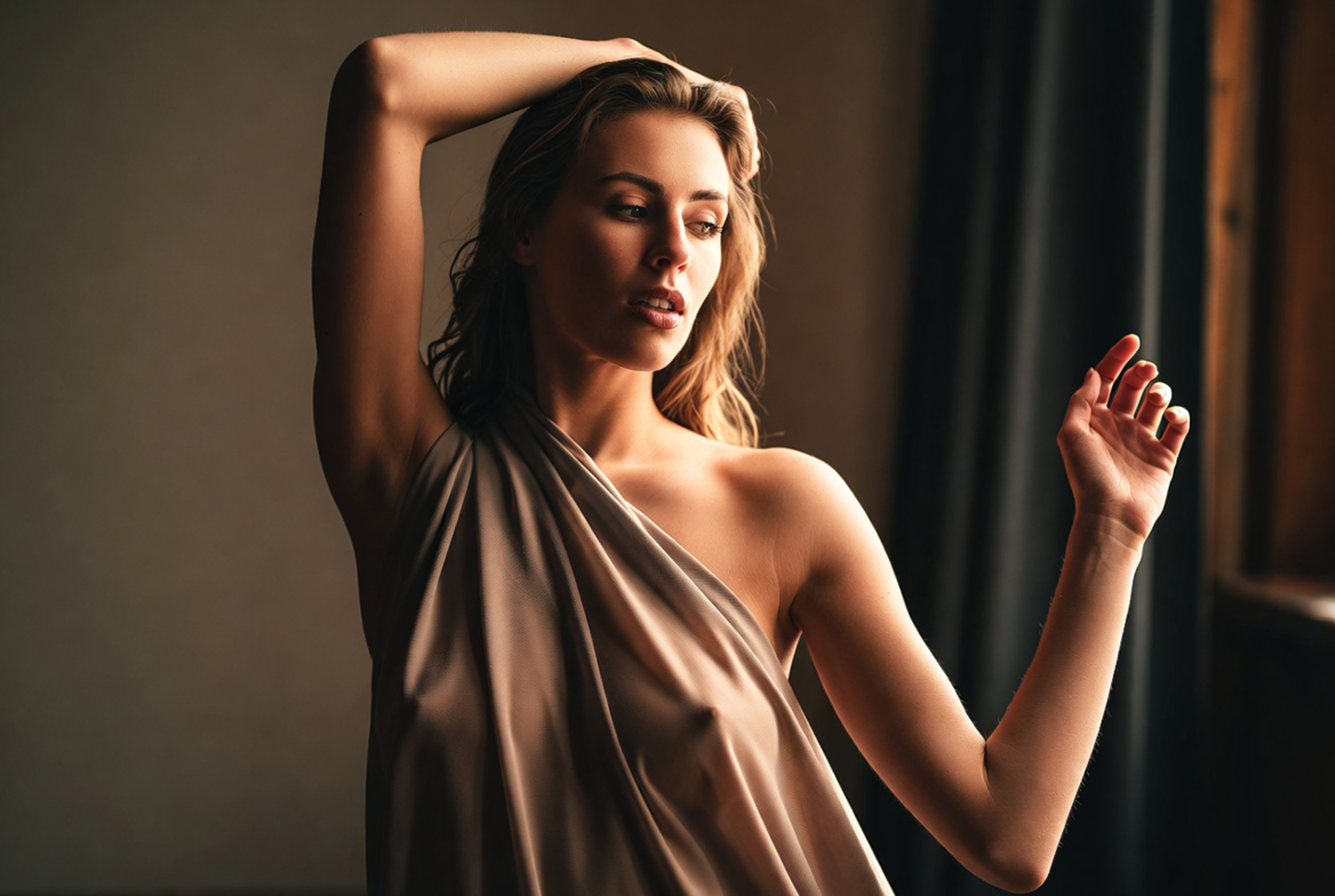
When you finally release control and trust the process, you unlock the ability to express your authentic self in front of the camera. This authentic expression creates images that don’t just show what you look like but reveal who you are—your personality, your strength, your sensuality, your joy. These photographs become more than pretty pictures; they’re visual narratives of your journey toward self-acceptance and empowerment.
Authentic self-expression during your session also contributes to personal growth that extends far beyond the photographs themselves. Many clients describe their boudoir experience as transformative, marking a turning point in how they relate to their bodies and themselves. By choosing to be vulnerable, to trust, and to let go, you’re actively practicing skills that serve you in all areas of life—the ability to be present, to release perfectionism, and to embrace your inherent worth.
Confidence and Empowerment
The confidence boost that comes from a boudoir session isn’t just about seeing beautiful images of yourself, though that certainly helps. It comes from the act of doing something that scared you, of being vulnerable and discovering you survived—even thrived—in that vulnerability. You prove to yourself that you’re capable of stepping outside your comfort zone, of trusting others, and of celebrating yourself in a profound way.
This newfound confidence often ripples into other aspects of life. Clients report improved self-esteem, healthier relationships, and greater willingness to take on new challenges after their sessions. When you’ve trusted yourself enough to be photographed in your most vulnerable state, many other fears start to seem less insurmountable. The session becomes evidence that you can do hard things, that you are strong and powerful.
Lasting Transformation
Perhaps the most significant reward of trusting the process is the lasting transformation it creates. Boudoir photography can serve as a form of self-care and even therapy, helping you process emotions, release old narratives about your body, and create new, empowering stories. The act of being seen—truly seen and celebrated—can heal wounds you didn’t even know you were carrying.
Your photographs become tangible reminders of this transformation. On days when doubt creeps back in, when your inner critic becomes loud, you have visual proof that you are beautiful, worthy, and deserving of celebration. These images document not just how you looked at a particular moment but who you became by choosing to trust, to let go, and to embrace your authentic self. That transformation doesn’t end when the session does; it continues every time you look at your images and remember the courage it took to create them.
Practical Tips for Your Session Day
Prepare Mindfully
The morning of your session, take time for self-care practices that ground and center you. This might include meditation, gentle yoga, or simply sitting quietly with your thoughts. Avoid rushing or overscheduling yourself on session day—the more stressed and hurried you feel beforehand, the harder it will be to relax during your shoot.
Consider preparing physically as well. Get adequate rest the night before, stay hydrated, and eat a nourishing meal before your session. Physical discomfort—hunger, dehydration, exhaustion—makes it much harder to be present and let go. Taking care of your body’s basic needs creates a foundation for being able to focus on the emotional and creative aspects of the experience.
Choose Outfits That Empower You
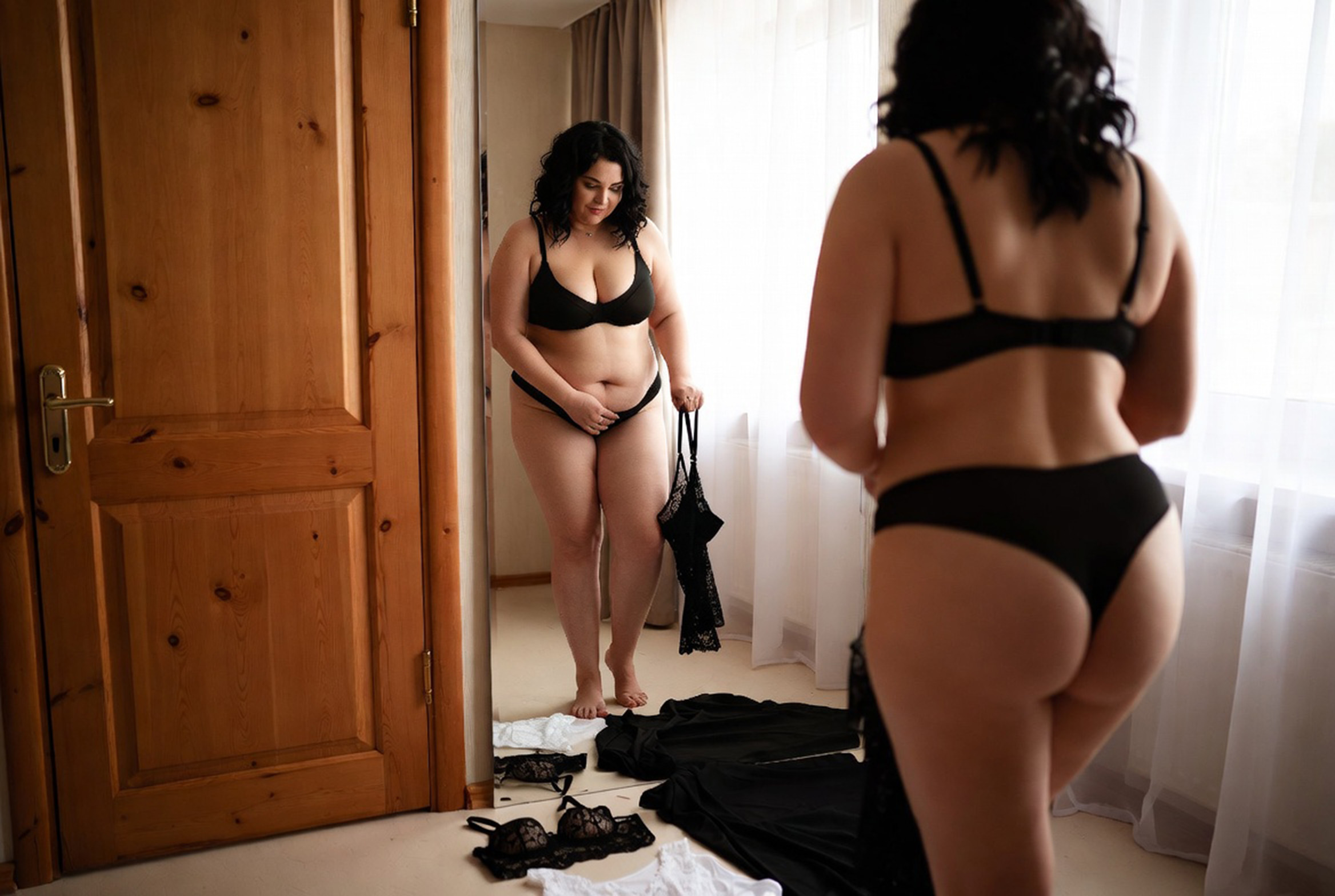
Select lingerie and outfits that make you feel confident and comfortable, not what you think you “should” wear or what looks good on someone else. When you feel good in what you’re wearing, that confidence translates directly into your images. Try on your chosen outfits beforehand to ensure they fit well and make you feel empowered rather than self-conscious.
Don’t be afraid to bring multiple options and trust your photographer’s guidance on what works best for the lighting and setting. Sometimes an outfit that looks amazing in your bedroom mirror doesn’t photograph as well as you’d hoped, and vice versa. Flexibility and trust in your photographer’s expertise will serve you better than rigid attachment to a specific look.
Create Rituals for Comfort
Consider what helps you feel relaxed and ask if you can incorporate those elements into your session. Many photographers are happy to play music you enjoy, allow you to bring a friend for moral support (though some prefer sessions to be one-on-one), or take breaks when needed. Creating a playlist of songs that make you feel confident, sexy, or happy can significantly impact the atmosphere and your comfort level.
Some clients find it helpful to bring comfort items—a favorite robe to wear between outfit changes, a meaningful piece of jewelry, or anything else that makes you feel secure. These touchstones can help ground you when nerves spike, reminding you that you’re in control of your experience even as you surrender to the process.
Trust the Review Process
After your session, resist the urge to be overly critical when reviewing images. Your photographer will guide you through selecting the strongest shots, and their professional eye can often spot beauty and power in images you might initially overlook. Trust their judgment while also honoring your own feelings about which images resonate with you.
Many clients experience a phenomenon where they look at an image and think, “That can’t be me—I don’t look like that!” This dissonance comes from seeing yourself through an objective lens rather than the critical internal view you’re accustomed to. Give yourself time to adjust to this new perspective. The person in those images is you—the real you, seen with compassion and artistry rather than harsh self-judgment.
Conclusion
Trusting the process during your boudoir session is ultimately an act of radical self-love. It requires releasing control, embracing vulnerability, and believing that you are worthy of celebration exactly as you are. The journey from nervousness to empowerment isn’t about eliminating fear but about moving forward despite it, trusting that something beautiful awaits on the other side of your courage.
Remember that every photographer you work with wants you to succeed and feel amazing. They’re not there to judge or criticize but to collaborate in creating images that capture your unique beauty and strength. By preparing mindfully, practicing techniques that ground and center you, and ultimately surrendering to the experience, you create space for transformation that extends far beyond a set of beautiful photographs.
Your boudoir session is more than an appointment—it’s a declaration that you matter, that your story deserves to be told, and that your body is worthy of celebration in this moment, not ten pounds from now or when everything is perfect. Trust the process, let go of what no longer serves you, and embrace the powerful, beautiful, authentic person you are. The images you create will be stunning not because they’re perfect, but because they’re real—and you are more than enough, exactly as you are.