Whether you’re preparing for a boudoir session, professional headshot, or family portrait, feeling comfortable in front of the camera is essential for capturing authentic, beautiful images. Studies show that 77% of women experience camera shyness, often citing feelings of self-consciousness or discomfort when being photographed. The good news? Camera anxiety is completely normal, and there are proven strategies to help you relax, embrace the experience, and showcase your true self. This comprehensive guide will walk you through preparation techniques, mindset shifts, and practical tips to transform your relationship with the camera.
Understanding Camera Anxiety and Building Confidence
Camera anxiety stems from vulnerability—being photographed requires you to be seen, judged, and captured in a moment of time. For many people, this triggers insecurities about appearance, body image, and self-worth. However, understanding that confidence in front of the camera is a learned skill, not an innate trait, is the first step toward overcoming these fears.
The foundation of camera comfort begins with self-love and positive self-talk. As one boudoir photographer notes, camera anxiety often starts with a negative inner dialogue. Ask yourself: “Why don’t I like my pictures?” If the answer involves body consciousness, recognize that your mind is running destructive narratives. Just as you wouldn’t criticize a friend’s appearance in a photo by saying “Your thighs are huge,” you shouldn’t speak to yourself that way either. Instead, adopt the perspective you’d use with a friend—looking at the whole person and making positive observations like “You look so happy!” or “Your eyes sparkle” or “You look amazing in that outfit”.
Research on body language demonstrates that our physical posture directly influences our mental state. Studies show that people who stand in “power poses”—expansive, open positions with chest up and shoulders back—for just five minutes experience increased testosterone (the strength hormone) and decreased cortisol (the stress hormone). More remarkably, these power posers were rated as more confident and more likely to be hired in mock interviews. This means that body language affects not only how others perceive us, but also how we perceive ourselves. By consciously adopting confident postures before and during your session, you can actually create the feelings of confidence you’re seeking.
Body positivity practices can significantly improve your relationship with being photographed. Rather than fixating on perceived flaws, shift your focus to what you appreciate about your body—not just its appearance, but what it allows you to do. Create lists of things you like about yourself, and every time a negative thought arises, counter it with something positive. This daily repetition helps break patterns of negative thinking. Additionally, speak positive affirmations aloud, especially when it feels difficult—place encouraging sticky notes on your mirror or set daily reminders on your phone. While this might feel silly at first, consistent practice creates lasting change.
Pre-Session Preparation: Setting Yourself Up for Success
Thorough preparation is the cornerstone of a confident photo session. As professional photographer Kelly Williams emphasizes, “No one is born naturally photogenic. People simply learn how to act in front of the camera. Good photos are essentially acting for the camera”. The more prepared you feel, the more confident you’ll appear.
Start with the right mindset. Your mental state going into a session profoundly impacts the final results. Begin with the confidence that you will achieve great photos. Trust your photographer and approach the experience with positive expectations rather than anxiety. Remember that the camera is not your enemy—it’s a tool to capture your best self. For your session, bring your best emotional self to the surface by thinking happy thoughts and allowing those feelings to translate to your face.
Identify your personal motivation. Write down your reason for having photos taken and bring this mental anchor with you to the session. When nerves arise, return to this “why”—whether it’s celebrating a milestone, creating a gift for a partner, or honoring yourself. This emotional grounding helps you push through awkward moments.
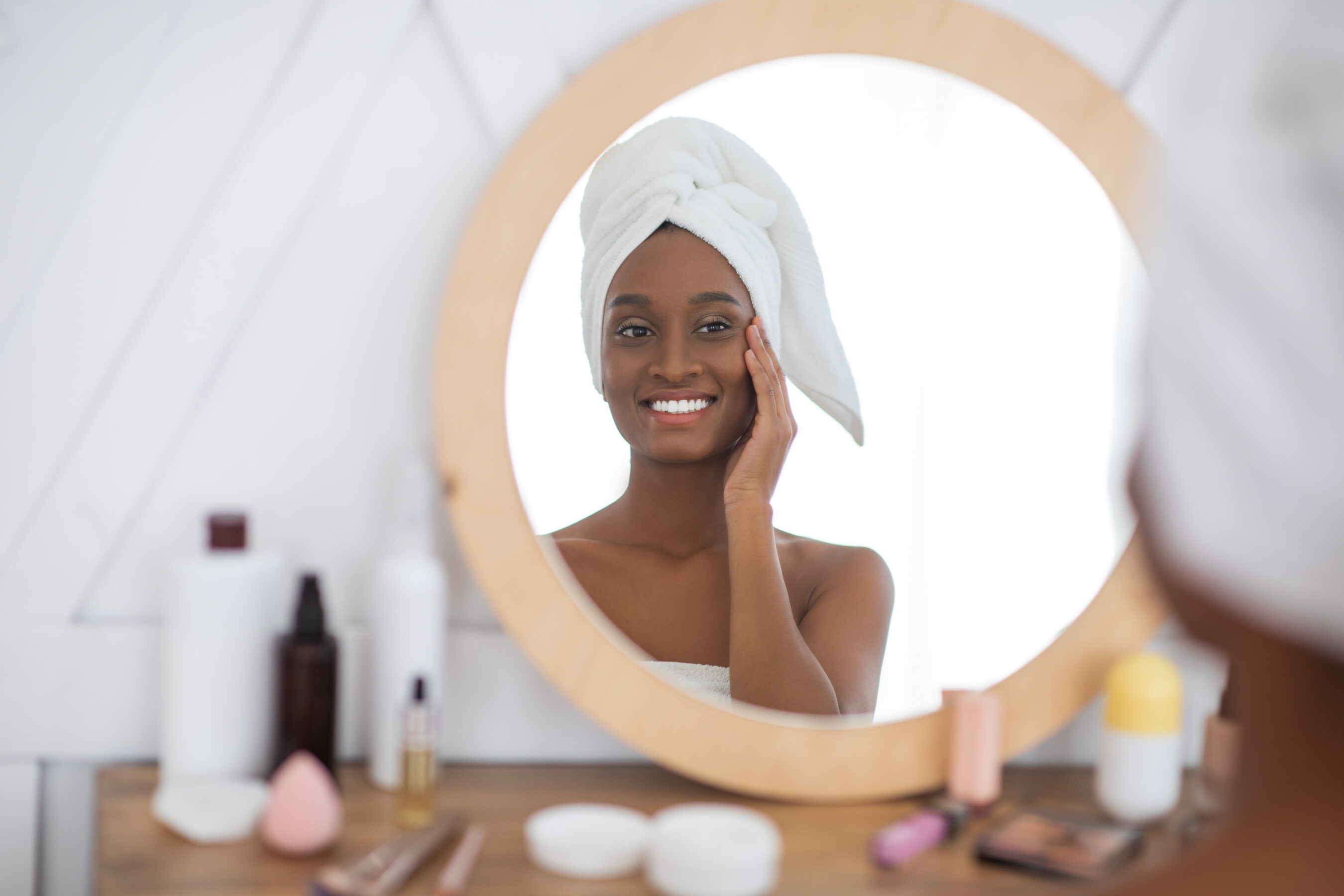
Practice makes perfect. Before your session, spend time in front of a mirror practicing your smile and different expressions. This allows you to discover what works for your face without an audience. Learn which angles you prefer, whether closing one eye slightly or if your lip tends to go up on one side. Take practice selfies to become familiar with how you look from various angles. While selfies may seem frivolous, they’re excellent training for understanding your best angles and expressions.
Hydration and skincare are essential in the days leading up to your session. Drink plenty of water for at least one week before your shoot—hydration elevates your mood, makes your skin glow, and helps makeup sit better on your skin. Moisturize your entire body daily for at least two weeks before the session. Hydrated skin reflects light more beautifully in photographs.
Skin treatments require careful timing. If you’re considering facials, laser treatments, or injections, allow 2-3 weeks between the procedure and your shoot to ensure complete healing and for any redness to disappear. Don’t introduce new skincare products close to your session date, as unexpected reactions could affect your comfort and appearance. Stick to your regular routine with gentle exfoliation using a soft dry brush or sugar scrub.
Hair removal should be timed strategically. Shave the night before your session or wax a few days prior to allow your body to heal and any redness to subside. However, if hair removal isn’t part of your routine, there’s no requirement to change that—your session should reflect your authentic self.
Hands and feet play an important role in many photographs, especially in boudoir and portrait sessions. Consider getting a manicure and pedicure the week of your session to ensure your hands and feet look their best. Whether you’re photographed with your hand in your hair, on your body, or with heels on your feet, well-groomed hands and feet contribute to your overall confidence.
Get adequate rest the night before your session. There’s a reason it’s called “beauty sleep”—being well-rested ensures you’re camera-ready and better able to manage any nervousness. Avoid alcohol and beverages that dehydrate you, as these can affect your skin’s appearance and your overall mood.
Wardrobe and Styling Preparation
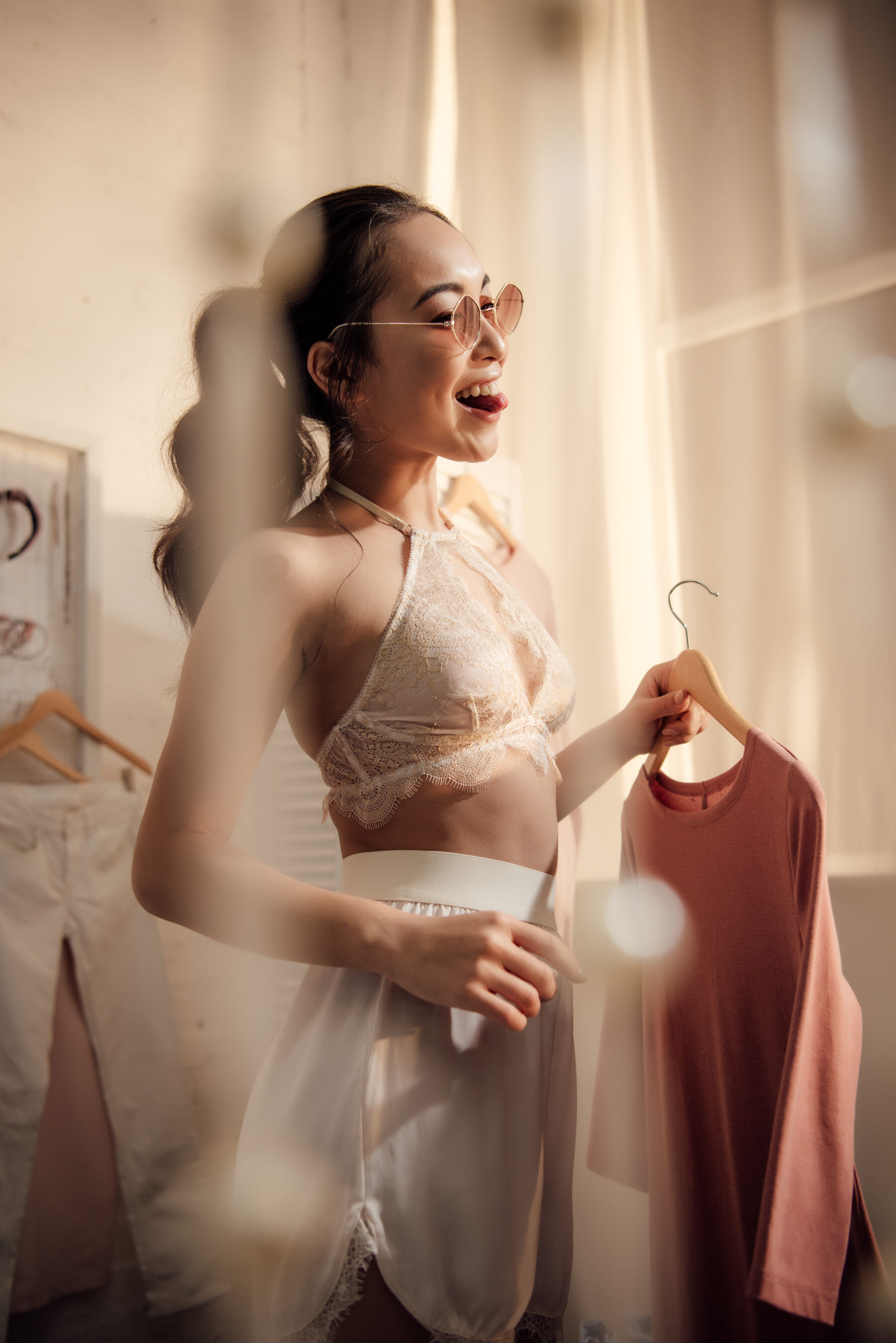
Choose clothing that makes you feel confident. This is perhaps the single most important wardrobe principle—if you don’t love how you look in an outfit, don’t bring it to your session. Wear pieces you already trust rather than building a costume. If something doesn’t fit right, rides up, cuts in, or leaves marks, leave it behind. Your comfort must be the priority, as discomfort reads instantly in photographs.
Bring multiple outfit options—typically 1-3 outfits for a shorter session and up to 5-6 for longer sessions. Different pieces photograph differently under various lighting conditions; some colors reflect light while others absorb it. Having variety gives your photographer flexibility and ensures you’ll capture different moods and styles. Include a mix of textures, as velvet, satin, sheer mesh, and ribbed knits show depth in-camera better than flat fabrics.
Try on all outfits beforehand and pack your bag the night before. This preparation eliminates day-of stress and ensures everything fits properly. Consider bringing a comfortable robe or wrap to wear between shots—you’ll appreciate having something warm and soft while moving around the space.
Don’t forget practical items: lip balm, a comb, travel-size deodorant, and any makeup touch-up products you might need. Bring light snacks and water—a light-headed client cannot be a confident client. Low blood sugar combined with nerves creates a recipe for anxiety spiraling.
During Your Session: Techniques for Relaxation
The actual photo session can feel strange at first, especially in the first ten minutes when you’re being photographed in potentially vulnerable circumstances by someone you may have just met. However, understanding that “weird doesn’t mean wrong—it means new” can help reframe the experience.
Breathing exercises are among the most powerful tools for managing anxiety during your session. When you feel nervous, your breathing typically becomes shallow and rapid, which signals your body to remain in a stressed state. Deep, intentional breathing activates your parasympathetic nervous system, which promotes relaxation.
Start your session by taking several deep breaths to center yourself. Breathe in through your nose and sigh out through your mouth. Continue by rolling your shoulders up and back, moving your head side to side, and shaking out any tension. If you start to freeze or tense up during the shoot, reset by repeating this process. You might even walk a few steps away from the camera, breathe with intention, spin around (perhaps laughing or smiling), and return to your position with renewed energy.
The box breathing technique is particularly effective for calming anxiety. Visualize breathing around a box: inhale as you imagine going up one side (count to four), hold your breath as you picture going across the top (count to four), exhale gradually as you travel down the other side (count to four), and pause again as you go along the bottom (count to four). Repeat this cycle 7-10 times while focusing entirely on your breath. This technique physiologically regulates breathing, increases oxygen to the lungs, reduces blood pressure, and lowers heart rate. Psychologically, it provides focus and removes attention from anxiety-causing thoughts.
Alternatively, try extending your exhale—inhale for a count of four, then exhale slowly for a count of six or more. Visualize your stress leaving your body with each extended exhale. This simple adjustment signals your body to relax by activating the relaxation response.
Movement and Posing
Movement is the antidote to stiffness. Many photographers recommend starting sessions with simple walking or movement exercises. Physical activity is an excellent way to release nervous energy before having to stand still and look directly at the camera. If you feel stuck or stiff at any point, start walking, spin in a circle, jump up and down—do whatever you need to get energy moving through your body. This movement not only frees up energy within you but also translates into more dynamic, lively images.
Don’t stand stiffly at attention. Natural, relaxed posture includes an S-curve at your waist, elbows, and knees. When holding hands with a partner, bend slightly at the elbows rather than keeping arms stiff. When giving someone a hug, bend at the waist to create that graceful S-curve. This creates a “sexy, not stiff” appearance—your posture should be as relaxed as it naturally is in everyday life.
Pay attention to your hands, which can become awkwardly stiff when photographed. Relax your hands from your wrist to your fingers, thinking of soft, gentle movements. Use props to give your hands something to do—lean against a wall, rest on a counter, hold a coffee cup, or interact with any object that provides support. Props aren’t just decoration; they’re context that can help you feel less self-conscious about your body position.
Create triangles with your limbs whenever possible, especially when sitting. Our eyes naturally follow shapes that lead to corners, creating visual interest. Bending elbows and knees not only looks better in photographs but also gives you something to focus on instead of worrying about looking awkward.
Shift your weight to one foot to create a more natural, flattering stance. This simple adjustment creates curves and makes you look less like you’re standing at attention. Most people naturally shift to their favorite stance when asked to imagine standing in a queue—this instinctive position usually photographs well.
Tune out the camera entirely and focus on something else. One of the quickest ways to ease camera shyness is to shift your attention away from being photographed. If you’re in a couple’s session, focus completely on your partner—look at each other, tell stories about how you first met, share inside jokes. These interactions create genuine expressions and help you forget the camera is there.
Think about something meaningful. What feeling or emotion do you want to convey in your images—trust, bliss, joy, confidence, serenity? Think about something that makes you feel that way. Go to the mental and emotional place where you experience what you most want to accomplish or feel. This internal focus creates authentic expressions that shine through in photographs.
Bring stories and jokes to share during your session. Photographers often ask couples to tell the story of how they met because the retelling often differs between partners and gets both people laughing and engaged. These moments of genuine connection and laughter create the most beautiful, natural photographs.
Engage with your environment rather than posing statically. The best photos capture moments in time rather than staged snapshots. Use your time in front of the camera to interact naturally with your surroundings and with others. Your photo session should be action-oriented, with constant natural movement creating a documentary-style tone.
Working with Your Photographer
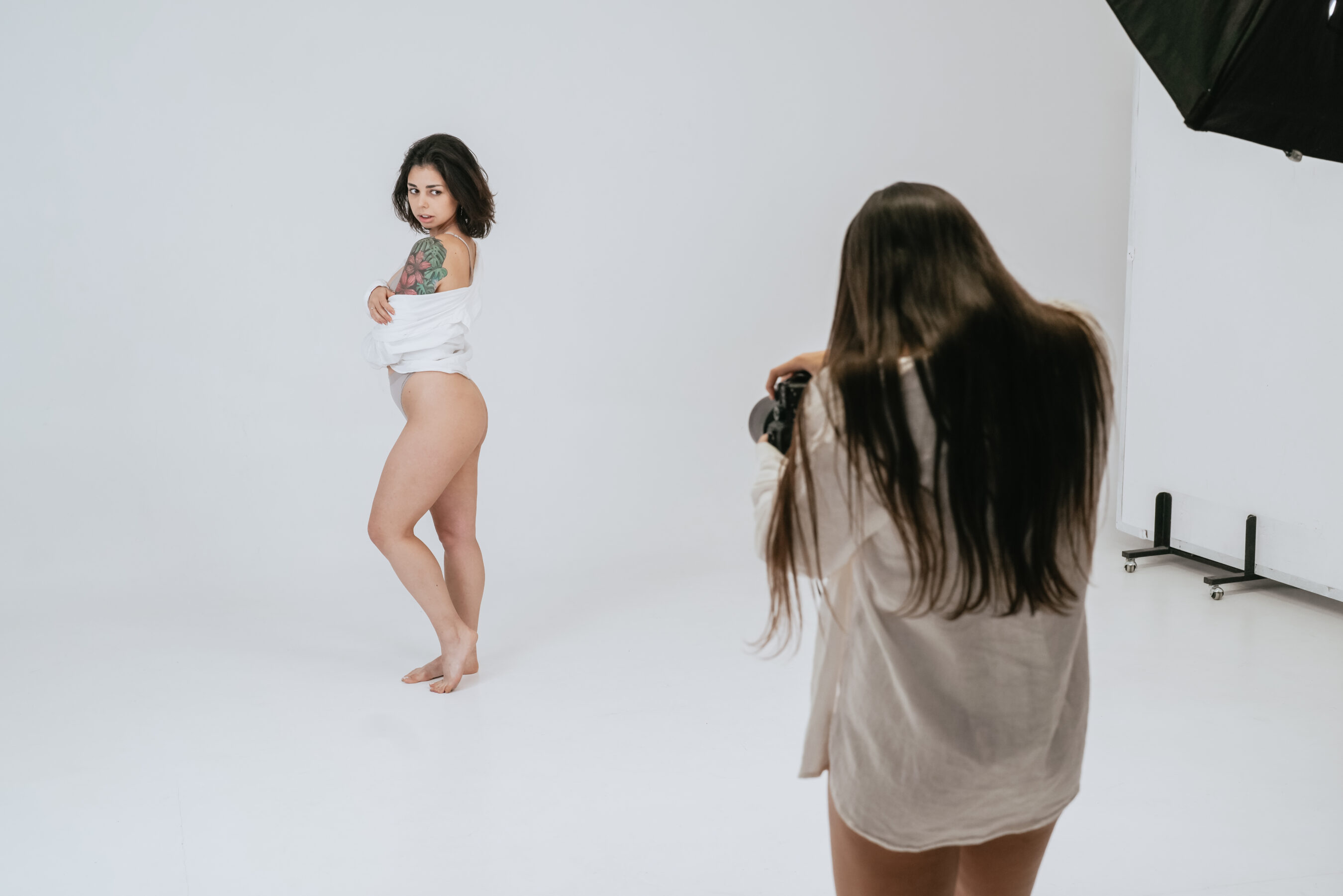
Communication is absolutely critical to a comfortable session. If you’re cold, say it. If a pose feels awkward, speak up. If you need a break, take it. Your photographer’s job is to manage the energy and guide you through the experience. Professional photographers should act more like “therapist-meets-director than paparazzi”.
Ask questions and lean on your photographer’s expertise. Most subjects being photographed aren’t experienced models, and that’s perfectly fine—it’s your photographer’s job to guide you into flattering poses. Professional photographers understand how to pose individuals and can teach you techniques during the session. From the top of your head to the tips of your toes, a skilled photographer will direct you on where to place your hands, how to hold them, how to angle your body, and how to position your face.
Request to see images during the session to build confidence. Most photographers shoot digitally and can show you images on the back of the camera to confirm you look great. This reassurance boosts your confidence as the session progresses. However, don’t check in after every frame, photos still need editing, and what you see on the back of the camera isn’t the final result. Everyone takes unflattering photos occasionally, so don’t be discouraged by some less-than-perfect shots.
Listen to positive feedback from your photographer. Professional photographers will give you compliments throughout the session, telling you when they like a pose or expression, or saying you look amazing, stunning, or strong. This encouragement confirms that you’re doing well and that you look fantastic. Always take this positive reinforcement to heart—it’s genuine.
Changing Your Relationship with Photography
Reframe the experience as something other than a “photoshoot”. Think of it as a date, a celebration, or quality time spent connecting with yourself or a partner. Whether wandering around your neighborhood, hiking to a favorite overlook, or simply soaking in golden hour light, the experience should feel more like a fun outing than a formal obligation.
Treat yourself before and after your session. Schedule a makeover, get your nails done, or plan a special dinner afterward to celebrate. Use the photoshoot as an excuse for self-care and reward yourself for stepping outside your comfort zone. These rituals transform the experience from something to endure into something to celebrate.
Face your fears boldly. Trying new things cultivates confidence, and your newfound confidence will shine through in your photos. Be bold in confronting camera anxiety—each time you do it, it becomes easier.
Curating Your Visual Environment
Surround yourself with body-positive content. Negative messages about body image are everywhere, and they have a way of infiltrating our thoughts and antagonizing our insecurities. These might be photoshopped images on billboards, body-negative people in your life, or critical posts on social media. According to research, participants who spent more time on social media were more likely to develop negative body image and eating disorders.
Curate your social media feeds intentionally. Heavily edited and unrealistic images of bodies can be toxic for your mental health and don’t reflect the vast majority of real-life experiences. Unfollow accounts that make you feel bad about your body and replace them with accounts emphasizing body positivity, body acceptance, and honesty.
Absorb body-positive literature and media. Balance the negative noise with positive perspectives. There’s excellent literature about body image that many readers find helpful in their journeys. Seek out books, blogs, podcasts, and music with body-positive messages to reinforce healthier thinking patterns.
Developing Sustainable Self-Love Practices
Stop comparing yourself to others. People come in all shapes and sizes, and each person is beautiful in their own way. Imagine how boring it would be if there were only one way to be beautiful. Comparing yourself to others leaves you feeling like you don’t look the way you should, but you’re not supposed to look like someone else—you’re supposed to look like you.
Cut out negative self-talk completely. Treat your body with the same kindness you’d treat a friend. If whatever you’re about to say about your body is something you’d feel bad saying about a friend’s body, don’t say it. Negative self-talk only digs you deeper into body-negative thinking patterns. You don’t deserve verbal abuse from anybody, especially from yourself.
Focus on your whole person, not just your physical appearance. You are so much more than how you look. A key piece of having healthy body image is to stop fixating on your body and spend more time thinking about things other than physical appearance. Throw yourself into your passions, pick up a new hobby, catch a movie with a friend, make something. Your body isn’t just decoration—it’s for doing.
Do something nice for your body regularly. When’s the last time you gave your body a gift just to say thanks for sticking with you? Carve out time to lay in the grass, take a bubble bath, walk to a pretty view, or take a good nap. These small acts of kindness remind you to appreciate your body for what it provides you
Conclusion
Feeling comfortable in front of the camera is a skill that can be learned and refined through preparation, practice, and mindset shifts. By understanding that camera anxiety is normal and addressable, you empower yourself to have a positive photography experience. The journey begins with self-love and extends through practical preparation—staying hydrated, practicing poses, choosing confidence-boosting outfits, and communicating openly with your photographer.
During your session, remember that breathing techniques, movement, and authentic emotional engagement are your most powerful tools. Trust your photographer’s guidance and expertise while also advocating for your needs and comfort. Most importantly, reframe the experience as a celebration of yourself rather than something to endure.
Building long-term confidence involves consistent practice with body positivity, surrounding yourself with supportive messages and people, and recognizing that you are so much more than your appearance. Each time you step in front of a camera, you’re practicing courage and self-acceptance. With these tools and techniques, you can transform from camera-shy to camera-confident, ultimately creating beautiful images that authentically capture your unique essence and radiant spirit.